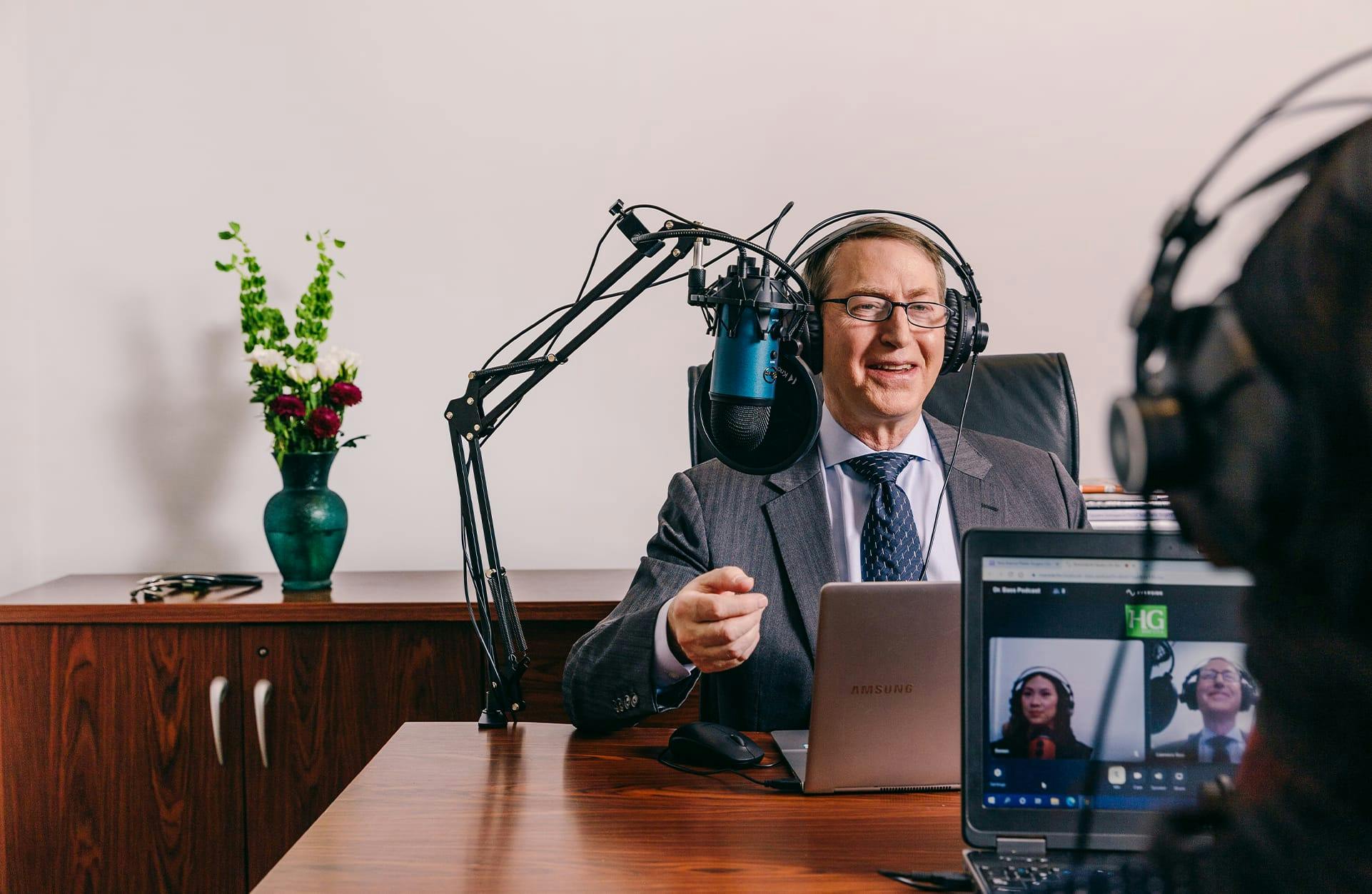
Watch:
Listen:
Sometimes you don't need a full makeover, but rather just a smart tweak. Dr. Bass introduces the idea of "beauty tweakments"; the small, low-downtime treatments designed to quietly keep aging in check without dramatic change.
He explains how tweakments fit into a bigger beauty plan, depending on your stage of aging, what you’ve already done, and what stands out most right now.
From Botox and light-based treatments to subtle filler in overlooked areas like earlobes, hands, and the neck, these small adjustments keep everything looking balanced and intentional.
Tweakments are maintenance, not transformation. Used thoughtfully, they can delay bigger procedures and keep you looking refreshed. Tweakments —showing moderation can be just right.
Listen to the previous episodes of our Beauty Series
About Dr. Lawrence Bass
Innovator. Industry veteran. In-demand Park Avenue board certified plastic surgeon, Dr. Lawrence Bass is a true master of his craft, not only in the OR but as an industry pioneer in the development and evaluation of new aesthetic technologies. With locations in both Manhattan (on Park Avenue between 62nd and 63rd Streets) and in Great Neck, Long Island, Dr. Bass has earned his reputation as the plastic surgeon for the most discerning patients in NYC and beyond.
To learn more, visit the Bass Plastic Surgery website or follow the team on Instagram @drbassnyc
Subscribe to the Park Avenue Plastic Surgery Class newsletter to be notified of new episodes & receive exclusive invitations, offers, and information from Dr. Bass.
Transcript
Summer Hardy (00:01):
Welcome to Park Avenue Plastic Surgery Class, the podcast where we explore controversies and breaking issues in plastic surgery. I'm your co-host, Summer Hardy, a clinical assistant at Bass Plastic Surgery in New York City. I'm excited to be here with Dr. Lawrence Bass, Park Avenue plastic surgeon, educator and technology innovator. The title of today's episode is Beauty Tweakments. Okay, Dr. Bass, another episode in our beauty series. What are we talking about today?
Dr. Lawrence Bass (00:30):
Treatments are small aesthetic treatments that are easy to do. They're quick, minimally invasive with little or no downtime and create a subtle or focused improvement in appearance. This term treatments has recently come up, which I think is a brilliant way to characterize them. Small changes that tweak your appearance rather than making a drastic change at the same time. They're easy to do and lower in cost than an aesthetic plastic surgery.
Summer Hardy (01:01):
So what is the role of these treatments?
Dr. Lawrence Bass (01:03):
Well, sometimes you need a full meal and sometimes you just need a snack. Sometimes you should go on a diet or a vacation from aesthetic treatments. So sometimes you look good, but it's just nice to keep something in check or just improve something a little bit, and that's all that's really needed at this point in time. And we talk about this a lot on the podcast. I've said I talk again and again about stage of aging and so depending what your stage of aging is and what previous treatments you've had, because if you've done a lot of restoration previously, you may not need another facelift. You need a tweakment. So it's got a role depending on what's going on overall with your appearance.
Summer Hardy (01:51):
That makes sense. But how do I know if tweakments are right for me?
Dr. Lawrence Bass (01:56):
So as I said, it's the stage of aging in general. It's what else you've done and what's showing on you individually. Then you have to meet that with what bothers you the most and what stands out as discordant with the other features. So you can fix wrinkles on the face, but the neck, chest, ear lobes also show wrinkles. They may stand out if your face has been all smoothed out, so you may need to chase those a little bit.
Summer Hardy (02:26):
How do I decide what the options are and which ones to pursue?
Dr. Lawrence Bass (02:30):
So having a beauty plan and a good ongoing relationship with an experienced full service plastic surgeon is a really good way to do this because a full service plastic surgeon isn't just pushing a treatment because that's all they do. They're not just pushing a facelift, that's all they do. They want to right size your plan at any one time.
Summer Hardy (02:57):
Got it. So what do I get out of tweakments?
Dr. Lawrence Bass (03:00):
Well, it helps you keep things fixed. You get that good feeling to see maintenance and small improvements. It keeps you engaged with your appearance in a constructive way so you don't get blindsided by any big aging change sneaking up on you, and it can postpone the need for some of the bigger fixes as well.
Summer Hardy (03:23):
Okay. We've talked a lot about treatments. Can you give me some examples of treatments that are commonly performed?
Dr. Lawrence Bass (03:30):
The big ones are things like Botox and other neuromodulators like Dysport and Daxxify, Jeuveau, IPL or BL treatments. Those are intense pulse light or broadband light treatments. Those will chase pigment, redness. Some other light features of skin quality, things like microdermabrasion, which smooth the skin surface and clean pores. There are energy-based skin lifting treatments like Ultherapy and Sofwave. Things like periorbital treatments, and there are a lot of little things in this area. Chemical peels or laser peels, filler and even blepharoplasty, particularly the upper blepharoplasty can be pretty short recovery. So maybe it falls under the category of a tweakment. And we mentioned filler in the lid areas, but of course there are options for the cheeks, the nasolabial folds and marionette lines, the jawline temples, areas like that. And importantly, the ear lobes because ear lobes empty out, get wrinkly, and a little bit of filler there can really make them look youthful.
(04:48):
There are a whole range of microneedling and channeling techniques with or without energy and associated with that, a lot of regenerative treatments are being done once you open the channels into the skin, applying platelet rich plasma or exosomes, which help reboot the skin's ability to maintain itself in a youthful state. Home skin products deserve a mention here as well. So I like to cycle skin products, which means each season you pick something that's best suited to that season. It prevents the skin from accommodating to the skin product, and it's a good way of maximizing your outcome without a big intervention. And then there are things like light chemical peels, like a red carpet peel that just gives you that glow and helps your skin look its best without involving downtime.
Summer Hardy (05:46):
That's a lot of different treatments, but they're mostly for face areas. Dr. Bass, are there some treatments for body areas as well?
Dr. Lawrence Bass (05:54):
There are are a variety of treatments for skin smoothing with energy. This is something we can do and have some progress with, not quite as much as we'd ideally want, but because spotty skin smoothing is so difficult, it's something to jump on early. And there's also use of hyperdilute fillers, fillers that stimulate collagen in and under the skin that get injected in hyper dilute form in certain body areas for skin smoothing. And of course things like cellulite treatments are also sort of a treatment to take some of the dimples out, so feel more comfortable out in shorts or a bathing suit.
Summer Hardy (06:38):
Are there any other less common or newer tweakments I should know about?
Dr. Lawrence Bass (06:43):
So I mentioned the ear lobes, and this is one where whether we're doing laser or we're doing filler, we really shouldn't leave it out, but it's not done as often as it probably ought to be. Very easy to do, very little, if any recovery. And it can really take an old saggy wrinkly earlobe and make it look plump and youthful. That's a great one. Things on the nose are often omitted, so everyone's chasing some wrinkle or rough texture on the face, but they ignore the large pores on the nasal skin. They always deserve to be included. You can never get rid of large pores, but you can shrink them because the pore, of course, is a natural structure in the skin, unlike a wrinkle. So we need them there, but we can shrink them if we're doing treatments for skin quality on the neck, chasing crepeness and those wrinkles that go across from side to side on the bottom of the neck are things to think about in addition to just the loose skin in the neck and pigment and rough texture in the décolletage area is another thing to chase, not leave out definitely a treatment but not done as often as things on the face.
(08:04):
The hands are an area all to themselves. Veins show more as we age. Tendons show more. We get rapy skin and age spots, and there's a whole range of treatments that we may be doing elsewhere, for example, on the face that we can do on the hands as well to help those changes be less evident. Occasionally we mentioned the big filler areas, but occasionally we actually boost the corner of the brow by building a little shelf of filler right at the bony orbital rim. And same thing at the corner of the nose. There's some bone loss as we age, particularly in our sixties and beyond, and sometimes we build back some of that volume at the nasal base or medically what we call the piriform aperture using a little bit of filler. Temples and jawline are newer areas for filler, but they're specific FDA approved fillers for jawline, and this is a big area to maintain that strong even shape and to avoid the hollowing out in the temples, which most people get with aging and can become quite pronounced in some individuals. Finally, on the nose, we can use filler for very small shape changes much smaller than we can reliably produce with a surgical intervention. So I'm a big advocate for rhinoplasty over liquid rhinoplasty or use of fillers in the nose in large amounts. But the need to just blunt very small features or make very small refinements and shape is something that we can do well with fillers that is sometimes less reliable with an actual rhinoplasty surgery.
Summer Hardy (09:59):
It sounds like there are a lot of options overall. What are the downsides of treatments?
Dr. Lawrence Bass (10:04):
So there are not a lot of downsides if they're properly applied, but they'll only focus on the individual feature and in the predictable amount. So it's kind of an evolutionary improvement. It's not transformational. In reality, that's a better approach. It just helps you to stay looking good by pushing little things back in place when they start to show rather than waiting for everything to fall apart. On the other hand, if a major fix is in order, opting for a treatment will be predictably inadequate. So it goes back to that question, do you need a snack or a full meal? Be realistic with yourself about this and use a full service plastic surgeon as your reality check. They'll tell you whether it's just a little focal energy blast for a little tighten up or it's time for a full lift. Also, they trickle away a portion of your beauty budget doing tweakments.
(11:05):
So if you're saving for a big fix, you'll get there sooner if you hold off on little things that are less important at the moment. It's also a truism that most people don't have the budget to chase literally everything possible, and that may be more aesthetic medicine than you want to fit into your schedule, or even that may be healthy for your face. At some point it becomes too much of a good thing. So overusing, tweakments, just like underusing them, leaves you not looking your best and maybe with your face not in the best shape.
Summer Hardy (11:42):
So Dr. Bass, can you summarize what our listeners should know about beauty tweakments?
Dr. Lawrence Bass (11:47):
A lot of small features can be telltales of age. If you've chased the major issues or you don't yet need those big items, keeping the small details in place will help you look your best. Treatments can be fun. They're quick and easy and relatively inexpensive to do, and they noticeably improve your appearance when used in the proper circumstances. They're just the thing when you need a little beauty boost and when you're smoothing facial wrinkles, leaving out some areas lets them stand out like a sore thumb, a wrinkly neck or chest, hands or ear lobes or giveaways. When the rest of the face looks smooth and you're not really as young as the major features, project features around the eyes have a big impact. It's a small area, but where people look most of the time when they're interacting with you. Botox and other neuromodulators are still the king of small feature improvements, creating an overall better and more pleasing appearance, the most popular patient pleasing treatment of all time. The ultimate tweakment.
Summer Hardy (13:01):
Thank you Dr. Bass for sharing these fun small beauty hits or treatments that everyone can enjoy. Thank you for listening to the Park Avenue Plastic Surgery Class podcast. Follow us on Apple Podcasts, write a review and share the show with your friends. Be sure to join us next time to avoid missing all the great content that is coming your way. If you want to contact us with comments or questions, we'd love to hear from you, send us an email at [email protected] or DM us on Instagram @drbassnyc.