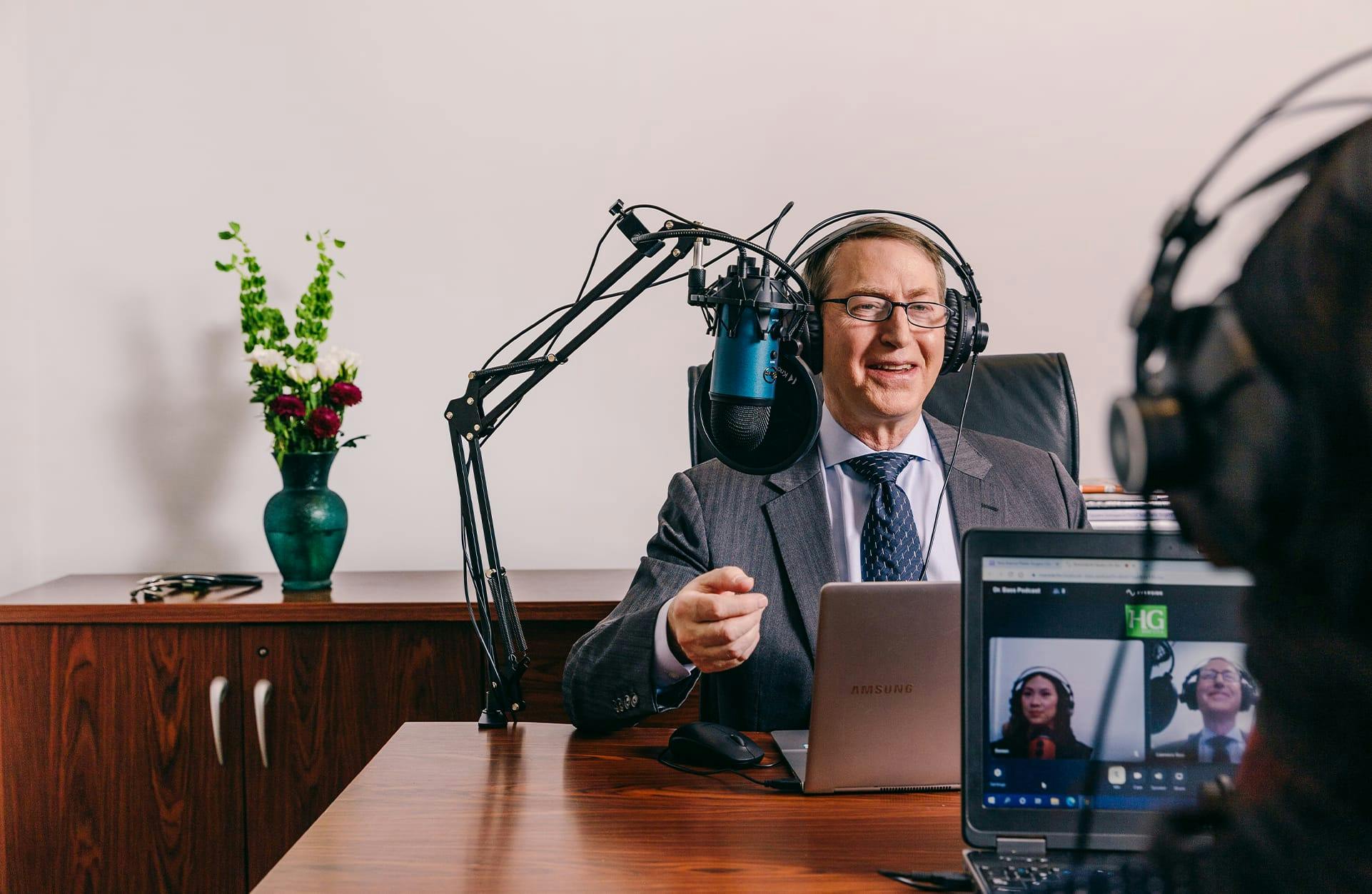
The timeline after a facelift matters just as much as the procedure itself. Dr. Bass and Dr. Kylie Edinger walk through what to expect at each phase of recovery and how the right habits can make all the difference.
They explain how to manage swelling, protect your incisions, and ease back into normal activity, and share the small mistakes that can slow healing or lead to complications.
Get practical guidance on everything from sleep positioning and skincare to exercise timelines and treatments that help support recovery.
When you follow the right steps at the right time, you give your facelift the best chance to heal smoothly and deliver the result you're hoping for.
About Dr. Kylie Edinger
Dr. Kylie Edinger is a plastic surgeon practicing in Bozeman, Montana. During the creation of this facelift series, she was training as an aesthetic plastic surgery fellow with Dr. Bass and a host of other world class plastic surgeons at Manhattan Eye, Ear, and Throat Hospital in New York City. Part of the prestigious Northwell Health program, this is one of the top aesthetic plastic surgery fellowships in the country. Dr. Edinger completed her plastic surgery residency at the University of Wisconsin.
Follow Dr. Edinger on Instagram @kylieedinger
About Dr. Lawrence Bass
Innovator. Industry veteran. In-demand Park Avenue board certified plastic surgeon, Dr. Lawrence Bass is a true master of his craft, not only in the OR but as an industry pioneer in the development and evaluation of new aesthetic technologies. With locations in both Manhattan (on Park Avenue between 62nd and 63rd Streets) and in Great Neck, Long Island, Dr. Bass has earned his reputation as the plastic surgeon for the most discerning patients in NYC and beyond.
To learn more, visit the Bass Plastic Surgery website or follow the team on Instagram @drbassnyc
Subscribe to the Park Avenue Plastic Surgery Class newsletter to be notified of new episodes & receive exclusive invitations, offers, and information from Dr. Bass.
Transcript
Summer Hardy (00:01):
Welcome to Park Avenue Plastic Surgery Class, the podcast where we explore controversies and breaking issues in plastic surgery. I'm your co-host, Summer Hardy, a clinical assistant at Bass Plastic Surgery in New York City. I'm excited to be here with Dr. Lawrence Bass, Park Avenue Plastic Surgeon, educator, and technology innovator. Today's episode is Facelift Do's and Don'ts, part of our series about the facelift. We had a facelift does and doesn't episode, now it's Dos and Don'ts. What's the distinction, Dr. Bass?
Dr. Lawrence Bass (00:32):
The does and doesn't episode talked about what the facelift does and doesn't accomplish. Basically what it can do and what it doesn't do in terms of which features of aging get corrected. This episode is focused on what things to do or not do, do or don't after a facelift. In essence, the instructions or steps to take and be careful to avoid after a facelift so the recovery and healing proceeds as planned.
Summer Hardy (01:06):
Okay. First, give me an overview, Dr. Bass.
Dr. Lawrence Bass (01:09):
The big picture things are based on time periods after the procedure. So obviously what you do in the first day when you just came out of the operating room is different from what you're doing a few days later, and that's different from what you're doing at the end of a week or the end of three weeks and so on. So there are sort of time periods during recovery when different sets of rules come into play. And every surgeon's rules will be a little different. So Dr. Edinger and I will share our individual approaches, but it will give everyone listening a general idea of what to expect.
Dr. Kylie Edinger (01:51):
And in addition to the timeline and the big time points that you need to follow, there are also big groups of instructions. So rules about things to do to help promote healing and minimize recovery. And then there are ways to best take care of your incisions, how to take care of your lifted face and neck skin and your hair. And then there are therapies to help with your healing and recovery along the way as well.
Summer Hardy (02:15):
Okay. Let's start at the beginning. What's the plan in the first few days after a face lift?
Dr. Lawrence Bass (02:21):
This is the immediate period, the first three to four days, and it's an important time. You've just had surgery. Everything needs to be left undisturbed so it can start the healing process. The plan is to rest quietly with a minimum of activity. So no bending and lifting, lounge in bed and on the sofa. The head should always be elevated on two pillows, never totally flat because that promotes more bruising and swelling. Also, spend as much time as you comfortably can while awake with cool compresses. This also helps minimize bruising and swelling. So most of the recovery is waiting for the bruising and swelling to go away, so the less bruising and swelling that comes in in that first three to four days, the less you have to wait out for it to go away. So investment of some effort at this point in time will pay big dividends in keeping everything on schedule and the shortest possible recovery.
Dr. Kylie Edinger (03:28):
And while you're cool compressing, there's also a few things you're going to have to do. You may be applying dressings and bandages during the day. You might be taking them off. You may have to drain your little drainage tube that you have. It's usually removed the day after surgery, but sometimes it's left in a little longer. You might have to clean your incisions with soap and water, maybe apply some sort of topical cream or ointment to the incisions. And your surgeon and staff will likely see you to help you clean up those incisions at your first appointment and give you some rules on what they prefer for water exposure, showering, shampooing, et cetera.
Dr. Lawrence Bass (04:02):
And this is very variable from surgeon to surgeon. It also varies a little bit based on the large number of other procedures that are often included with the facelift. So things like laser resurfacing have a lot of hair and management and wrinkles on the face are often zapped with laser resurfacing at the same time that a facelift is done. Blepharoplasty is also very commonly done at the same time as a facelift. So that's going to have its own set of instructions and things to do in the first few days.
Summer Hardy (04:41):
Okay. So that gets us through the first few days. Where do we go from here?
Dr. Lawrence Bass (04:46):
Well, now we're talking about the first two weeks of healing. During this time, there'll typically be two visits to the surgeon for suture removal and to clean up the incisions and check the healing. Sometimes more than that, but typically at least that many.
Dr. Kylie Edinger (05:04):
And you don't need to apply cool compresses usually after the first three days or so. And then at this point, you can usually start gently washing your hair and incisions as well. You'll continue to sleep elevated and maybe using a compression garment like a facelift strap or a chin strap during the day or maybe just at night. We usually have you apply ointments like Vaseline or Aquaphor to your incisions daily, and that'll help loosen up any of those remaining crusties.
Dr. Lawrence Bass (05:27):
And unless there's some kind of a healing problem or infection, we usually do not use antibiotic creams. Sometimes people get sensitized to that and it actually interferes. The allergic reaction to the antibiotics can interfere with the healing of the surgery. Compression garments are controversial, how much they help, how appropriate the area of compression is to where you need it, where your swelling develops, and what impact that has on blood supply to the skin that was just lifted. So that's going to vary from surgeon to surgeon. Usually there's at least something in the first day or so, but sometimes that's the end of it. And other times there's some support with a compression garment for the first two or even three weeks.
Summer Hardy (06:19):
So these are all mostly dos. What are the don'ts?
Dr. Kylie Edinger (06:23):
Well, we still don't want you to do any bending, lifting sports or engaging in any sexual activity. We don't want you to take any aspirin or NSAIDs so that can increase your risk of bleeding. We don't want you to use any hair dryers or heat styling or even heating pads on your skin as your skin is numb and it can actually be easily burned without you even realizing it. We don't want you to do any hair coloring, like we said, or hair waxing. And for men, this means no hair shaving and then no vigorous brushing of your hair.
Summer Hardy (06:51):
Okay. And what are the main dos and don'ts in the later healing beyond two weeks?
Dr. Lawrence Bass (06:57):
The basic healing period, both biologically and in terms of what we observe clinically goes out to about six weeks. So most routine work and social activities are okay during this period from two to six weeks, you're okay to work back into sports in a progressive way. Again, every surgeon varies, but I'll usually allow some light cardio starting at two weeks and by three weeks, somewhat more aggressive sports can be progressively resumed.
Dr. Kylie Edinger (07:37):
You can also start doing scar treatments on your incisions. There are a lot of them out there, but ones that have silicone seem to be the best. Also make sure that you're covering your incisions from sun exposure, whether that be some sort of sunscreen or a hat. You can camouflage your incisions during this time period and any remaining bruising that you might have with makeup. You can also style your hair in a creative way to hide those incisions. Like Dr. Bass said, we typically allow light cardio at two weeks with some of the heavier lifting and more aggressive sports at the three to four weeks, but this will vary on your surgeon. And then you can start coloring your hair again at four weeks and then waxing around four to six weeks. But again, we want you to use caution when you start using heat and heat stylers, hair dryers, curling hair, straighteners.
(08:21):
At this time period until the sensation really starts to return to the skin just so you don't burn yourself. And then be really careful when you are washing, shaving, et cetera, in those numb areas so that you don't damage anything.
Summer Hardy (08:33):
All that makes sense. So what is the overall time course for healing and recovery?
Dr. Kylie Edinger (08:38):
Be healing on the inside from that six weeks to three months period, but during this time you'll look more presentable and outsiders won't know that you had surgery. You'll still notice subtle swelling, firmness. You'll feel things healing on the inside and you'll notice subtle changes in your appearance as things continue to improve and your incisions are not going to typically mature until at least six months after surgery. Sometimes that takes longer for them to mature fully, closer to the 12-month mark.
Dr. Lawrence Bass (09:06):
And you're returning to all your normal things in life at this time, but the result is still finalizing. You're still aware things are changing. So while you finish healing, it's important to maintain good nutrition. And another thing that people don't think about a lot is remember you need support and positivity from caregivers and those around you who know you had the procedure, close family members or friends who are in the know. Everybody knows to expect some swelling and bruising, but when you see it on your own face, it has a psychological impact. And you also have concerns about how the facelift is going to come out, how are you going to look? And so having some support around you and positivity is really important. And conversely, if you're getting negativity from those around you, that can really be disruptive and make it a very difficult, unhappy time unnecessarily.
(10:14):
So plan a little bit for that when you pick your caregivers.
(10:27):
There are a bunch of different options. There are a lot of techniques to help the swelling go more quickly. So things like ultrasound, lymphatic massage, and there are even some high technology massaging kind of garments that will shift lymphatic fluid out of the swollen tissues and back into the circulation. We use lasers routinely to help speed the clearance of bruising and to help blend the scars more quickly and more completely. Some surgeons will use hyperbaric oxygen to help improve the amount of blood supply in the tissues so that the tissues can heal more quickly. And some surgeons also apply fat or platelet-rich plasma or exosomes during surgery to help modulate the healing because fat and particularly certain forms of fat like nanofat contain growth factors, fat in grafting contains stem cells that, and all of this can signal for rapid healing, complete healing, and maybe ramp up the process compared to going without.
(11:50):
Some people also add skincare to modulate or amplify the healing, and there are some skin products expressly developed for healing after surgery or healing after laser treatments to help that healing go more quickly. And just as you can take nutritional supplements before surgery to be ready to heal, taking nutritional supplements while you're healing sometimes can be helpful and some surgeons are very pro on that approach.
Dr. Kylie Edinger (12:21):
I had some patients recently also say that they have some success with red light therapy for helping with some of that swelling after surgery.
Dr. Lawrence Bass (12:28):
Yes, there are a lot of biological effects of what's called LLLT, low level light therapy. So these are not high powered lasers. They come from light emitting diodes, but they trigger a variety of biological effects in cells that may be clinically significant in helping to curb inflammation and to speed healing.
Summer Hardy (12:54):
Okay. And can you share some takeaways with us about caring for your facelift, Dr. Bass?
Dr. Lawrence Bass (13:00):
The number one thing I would say to people right after a facelift is understand the rules, follow the rules. They're not arbitrary. They're based on someone else's bad experience that your surgeon is trying to help you avoid. The time limits are based on a lot of details of the biology of healing. Again, we said no this or that for a certain period of time. There are reasons for those time limits based on when strength develops in healing surgical areas based on time periods when bleeding risk is high. Different care is needed at different time points. Your surgeon will confirm that you're ready to progress to next steps by seeing you in the office monitoring your progress during healing. Less is more, particularly in the first few days, leave things quietly for the required period of time so the healing progresses on schedule. Don't improve the process.
(14:08):
It's not too much, not too little. The amount needs to be correct. If there's a healing problem, your surgeon should be involved sooner rather than later. So stitch in time saves nine. They should be aware so that they can intervene if it's appropriate. If you're confused or unsure about instructions, get them clarified with your surgeon or the surgeon's staff, and each surgeon will employ whatever advanced technologies they've found to be helpful to speed recovery or correct some of the early changes and help them resolve. Overall, the recovery is a time for patients. As long as things are doing what they're supposed to do, a minimum of intervention is needed. The healing progresses, everything settles, but it always takes longer than we want. With time, you'll get the restored face you signed up for.
Summer Hardy (15:11):
Thank you, Dr. Edinger and Dr. Bass for sharing this essential information about how to care for your facelift. Our next episode in this series will cover a discussion of facelift incisions. Thank you for listening to the Park Avenue Plastic Surgery Class Podcast. Follow us on Apple Podcasts, write a review, and share the show with your friends. Be sure to join us next time to avoid missing all the great content that is coming your way. If you want to contact us with comments or questions, we'd love to hear from you. Send us an email at [email protected] or DM us on Instagram @drbassnyc.