There's no shortage of plastic surgery advice online, but not all of it is rooted in fact.
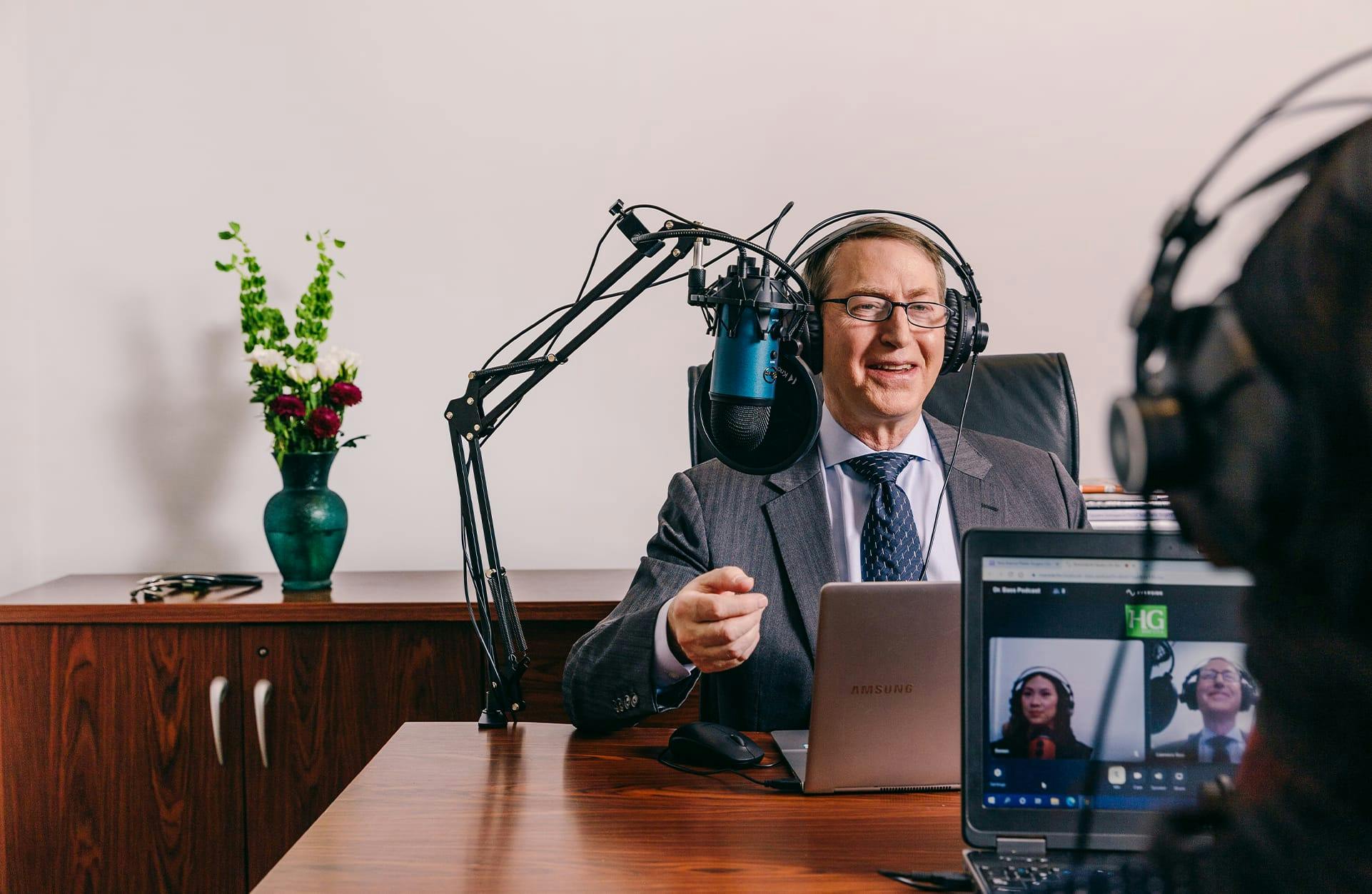
Dr. Lawrence Bass introduces his "Facts and Fallacies" series designed to help you separate what's true from what just sounds convincing.
He explains why misinformation spreads so easily, from attention-driven media to the complexity of medical topics, and decodes the difference between evidence-based facts and personal opinion.
The goal is to help you think more critically and make decisions based on real, reliable information—not internet noise.
About Dr. Lawrence Bass
Innovator. Industry veteran. In-demand Park Avenue board certified plastic surgeon, Dr. Lawrence Bass is a true master of his craft, not only in the OR but as an industry pioneer in the development and evaluation of new aesthetic technologies. With locations in both Manhattan (on Park Avenue between 62nd and 63rd Streets) and in Great Neck, Long Island, Dr. Bass has earned his reputation as the plastic surgeon for the most discerning patients in NYC and beyond.
To learn more, visit the Bass Plastic Surgery website or follow the team on Instagram @drbassnyc
Subscribe to the Park Avenue Plastic Surgery Class newsletter to be notified of new episodes & receive exclusive invitations, offers, and information from Dr. Bass.
Transcript
Summer Hardy (00:01):
Welcome to Park Avenue Plastic Surgery Class, the podcast where we explore controversies in breaking issues in plastic surgery. I'm your co-host, Summer Hardy, a medical student in New York City. I'm excited to be here with Dr. Lawrence Bass, Park Avenue plastic surgeon, educator, and technology innovator. Today's episode is the start of a new series, our Facts and Fallacies series. What motivated this new series, Dr. Bass?
Dr. Lawrence Bass (00:25):
Well, there's so much information out there about plastic surgery from so many different sources with all kinds of backgrounds, all kinds of actual knowledge of the field. There's very little priority in a lot of what's out there for truth, and it's harder still to determine how much truth, how much actual research and fact-based presentation is going on. And in media, whether it's social media or more traditional media, just information on the internet, it's very hard to understand how they're putting the information together and the priority of generating ratings, the spiral of posting and presenting more and more extreme things to attract attention. This certainly happens in social media and that spills over into mainstream media. So that was the initial motivation. Basically, when I hear things that don't match my opinion because we're entitled to have a range of opinions about things, but things that are pretty factually incorrect and I hear that repeatedly, then I start to say, "Okay, maybe we need an episode about this."
(01:53):
And I've seen that for a number of topics, so I thought that could actually form the basis for a whole series.
Summer Hardy (02:01):
Thank you for sharing. So how does this complicate getting useful information?
Dr. Lawrence Bass (02:07):
Well, plastic surgery is a technical topic. It's a complex topic. Most lay people don't have a background in medicine, so they can understand it on a certain level, of course, being smart people, but the ability to understand all of the technical background is very, very difficult. And it's hard to learn fields like that in the kind of reality distortion field that's taking place on the internet. And it's also very hard to discern, as I said on the internet, not only how much research was done or what the factual basis is, but people are not very good at expressing whether something's an opinion or a fact. And a lot of what I discuss on the podcast is my professional opinion based on 30 plus years of practice. However, some of that has a very strong factual basis and everything that I say is in line with consensus opinion at professional medical societies.
(03:29):
In other words, things that most of the people in the field would acknowledge are accepted. Some things are my individual opinion, but I try to make it clear this is how I choose to do it or how I've selected versus the informational component where I'm explaining how something works.
Summer Hardy (03:53):
Isn't this kind of a gray zone with a range of opinions?
Dr. Lawrence Bass (03:57):
Well, there are different opinions about whether something is a fact, so there is to some extent a gray zone here. However, there are some things that are not really opinions. They simply fly in the face of all of the objective data that's out there, or they're simply incorrect as a matter of definition. And so it's very hard to represent those things as opinions in any rational way. They're errors of fact, and therefore that's a fallacy and it needs to be corrected.
Summer Hardy (04:43):
Can you be a bit more specific, Dr. Bass?
Dr. Lawrence Bass (04:46):
So just going back to basic definitions, a fact is something that's known or proved to be true. And there's a certain way in medicine that we prove things by doing research, and that's called evidence-based medicine. It's a certain way of conducting clinical research studies to prove that a question, a proposition about how something works or what the effect of something is, is true or is not true. And evidence-based medicine is conducted in plastic surgery. I've been involved in many, many of these research studies over the past decades, but it's hard to do in plastic surgery for a couple of reasons. The number of cases is relatively small. If you study cancer or you study heart disease, there are millions of Americans that are afflicted. And aesthetic plastic surgery is in hundreds of thousands of cases and less in a given year. And in a given setting, it's in much smaller numbers of cases, hundreds.
(06:04):
So it's much harder to do a study and measuring the outcome when the goal is a change in subjective appearance is, again, a difficult thing to measure. So this has hampered the ability to do evidence-based medicine in plastics. It's not impossible, but it means that less has been done than could have been, and it empowers people to express a range of opinions with no basis in data, fact, proof, because it suits their purposes.
Summer Hardy (06:47):
That makes sense. So what will you cover in the series?
Dr. Lawrence Bass (06:51):
Well, a range of different topics of high interest in plastic surgery and that are showing a lot in the media. I'd like to point out things that are common misconceptions that lots of folks think about different plastic surgery treatments or things that are really showing up in social media or on the internet over and over with some fallacy or misconception, basically a mistaken belief or faulty reasoning or some kind of unsound argument. So where I see that, I'd like to set the record straight, provide a little more reality-based information, which allows for better decision-making.
Summer Hardy (07:37):
That sounds really interesting and important useful information to hear called out as a factor fallacy. So how should the listeners use these episodes?
Dr. Lawrence Bass (07:47):
So we'll present a number of statements that are either present on the internet or that have been discussed in articles in media or that patients often think about related to a certain plastic surgery treatment. And with each statement, the listeners can ask themselves, "Do you think this is a fact or a fallacy?" And see how accurate your knowledge and judgment are, but don't feel bad if you get a few wrong. You're not really to blame. It's the massive amount of misinformation on the internet that's responsible for a lot of the misconceptions or fallacies that we're all walking around with. So these episodes will be a chance to set the record straight. As I said, make sure you're not using any pivotal information in your decision making that is not real, because obviously it's hard to make a good decision if you're not basing it on truth or real facts.
(08:51):
This will allow you to have a little more confidence in decision making and confidence in your understanding of areas in plastic surgery that you are considering having performed or that are of interest to you.
Summer Hardy (09:09):
Got it. And any final takeaways for our listeners?
Dr. Lawrence Bass (09:13):
Well, your parents and grandparents would tell you use common sense and common sense helps a lot when consuming social media or any kind of information. If it sounds too good to be true, it likely is. Is the source promoting themselves or are they providing education? Is the source authoritative or have some basis in data or did they just throw together a little bit of commentary on a phone interview 20 minutes before a publication deadline? Are you hearing both sides of the story, the advantages and the disadvantages, the good, the bad, and the ugly? Or is it just the pie in the sky, everything's great side of things?
Summer Hardy (10:06):
Thank you, Dr. Bass, for coaching me and our listeners about how to separate facts from fallacies. I look forward to hearing the specifics in upcoming episodes in the series. Thank you for listening to the Park Avenue Plastic Surgery Class Podcast. Follow us on Apple Podcasts, write a review, and share the show with your friends. Be sure to join us next time to avoid missing all the great content that is coming your way. If you want to contact us with comments or questions, we'd love to hear from you. Send us an email at [email protected] or DM us on Instagram @drbassnyc.